DIVERGE
Generates billions of novel NLR immune receptor variants by systematically diversifying the Leucine-Rich Repeat (LRR) domain that determines pathogen recognition. Pairs receptor diversity at scale with a defined selection target.

Rgenerate is an Imperial College London synthetic biology spinout engineering plant immune receptors against emerging crop disease, in weeks rather than decades.
Rgenerate engineers plant immune receptors for crops that have no natural defence against a given pathogen. The platform generates and validates new receptor variants in weeks, producing candidates that can be integrated into elite crops to protect yields against existing and emerging disease threats.
Generates billions of novel NLR immune receptor variants by systematically diversifying the Leucine-Rich Repeat (LRR) domain that determines pathogen recognition. Pairs receptor diversity at scale with a defined selection target.
Validates which engineered receptors activate the plant immune response when a pathogen is present. Only candidates that trigger genuine protection progress to licensing.

Co-Founder · REAP inventor
Royal Society University Research Fellow and Assistant Professor at Imperial College London. Led the first demonstration of NLR–nanobody fusion immune receptors that confer plant disease resistance against arbitrary protein targets (Kourelis et al., Science 2023).
Royal Society URF · ERC StG · ARIA
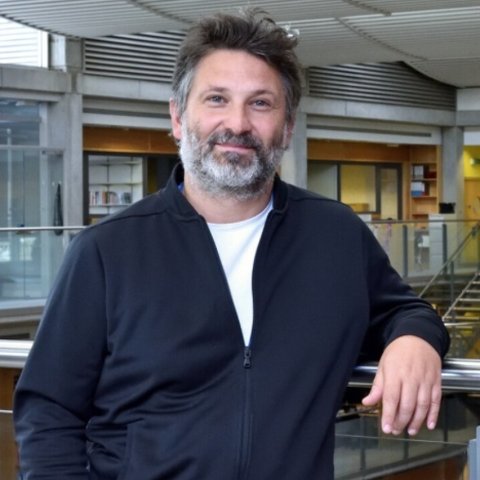
Co-Founder · DIVERGE inventor
Associate Professor in Genetics at Imperial College London with nearly two decades of work on genome engineering and engineering biology. He pioneered the first proof-of-principle gene drive systems in mosquitoes.
Gates Foundation funding · ERC · BBSRC

Venture Builder · DT Prime, Imperial College London
Lead venture builder at DT Prime, Imperial College London's deep-science commercialisation programme. Supports founders in turning early-stage scientific research into investable ventures. Joined DT Prime in December 2024.

Technical Lead
Drives technical validation of the DIVERGE and REAP platforms. PhD researcher in plant molecular biology, Department of Life Sciences, Imperial College London.